Article: How to Make Your Pots & Pans Last Longer: Care Tips Every Cook Should Know
How to Make Your Pots & Pans Last Longer: Care Tips Every Cook Should Know
How to Make Your Pots & Pans Last Longer: Care Tips Every Cook Should Know
Quality cookware is an investment. Whether you own a premium nonstick cookware set, stainless steel pans, or ceramic cookware, proper care can significantly extend its lifespan and maintain cooking performance for years.
Unfortunately, many home cooks unknowingly damage their cookware through everyday habits such as overheating pans, using the wrong utensils, or improper cleaning techniques.
The good news? A few simple changes can help protect your cookware, improve cooking results, and save money in the long run.
Here are the essential cookware care tips every cook should know.
Why Proper Cookware Care Matters
Your pots and pans endure constant exposure to heat, moisture, food residue, and cleaning products. Without proper maintenance, even high-quality cookware can suffer from:
-
Scratched cooking surfaces
-
Warped bases
-
Discoloration
-
Reduced nonstick performance
-
Uneven heating
-
Shortened lifespan
By following a few best practices, you can keep your cookware looking and performing like new.
1. Avoid Overheating Empty Pans
One of the most common cookware mistakes is heating an empty pan for too long.
Excessive heat can damage cookware in several ways:
-
Shorten the lifespan of nonstick coatings
-
Cause warping
-
Create uneven cooking surfaces
-
Discolor stainless steel
Best Practice
Always add oil, butter, water, or food shortly after placing the pan on the heat source.
For most everyday cooking, medium heat is sufficient and often produces better cooking results than high heat.
2. Use the Right Utensils
The utensils you use can have a significant impact on cookware durability.
Best Utensils for Nonstick and Ceramic Cookware
-
Silicone utensils
-
Wooden utensils
-
Heat-resistant nylon utensils
Utensils to Avoid
-
Sharp metal spatulas
-
Forks
-
Knives
-
Metal whisks on coated surfaces
While many stainless steel pans can tolerate metal utensils, coated cookware benefits from gentler tools that protect the cooking surface.
3. Let Cookware Cool Before Washing
Moving a hot pan directly into cold water may seem harmless, but the sudden temperature change can stress the material.
This phenomenon, known as thermal shock, may lead to:
-
Warping
-
Surface damage
-
Reduced heat distribution
Best Practice
Allow cookware to cool naturally before cleaning.
A few extra minutes of patience can add years to your cookware's lifespan.
4. Clean Cookware Properly
Different cookware materials require different cleaning methods.
Nonstick Cookware
Use:
-
Warm water
-
Mild dish soap
-
Soft sponge
Avoid:
-
Abrasive scrubbers
-
Steel wool
-
Harsh cleaning chemicals
Stainless Steel Cookware
For stubborn residue:
-
Soak in warm water
-
Use baking soda when necessary
-
Avoid excessive force that may scratch polished surfaces
Gentle cleaning preserves both appearance and performance.
5. Avoid Cooking Sprays on Nonstick Surfaces
Many people assume cooking sprays are harmless, but they can leave behind residue that gradually builds up on nonstick cookware.
Over time, this buildup may reduce food release performance.
Better Alternative
Use:
-
Small amounts of cooking oil
-
Butter
-
Oil misters
This helps maintain the effectiveness of your nonstick cookware for longer.
6. Store Cookware Carefully
Improper storage is a major cause of scratches and cosmetic damage.
When pots and pans are stacked carelessly, cooking surfaces may rub against each other.
Storage Tips
-
Use pan protectors between stacked cookware
-
Store lids separately when possible
-
Avoid placing heavy items inside nonstick pans
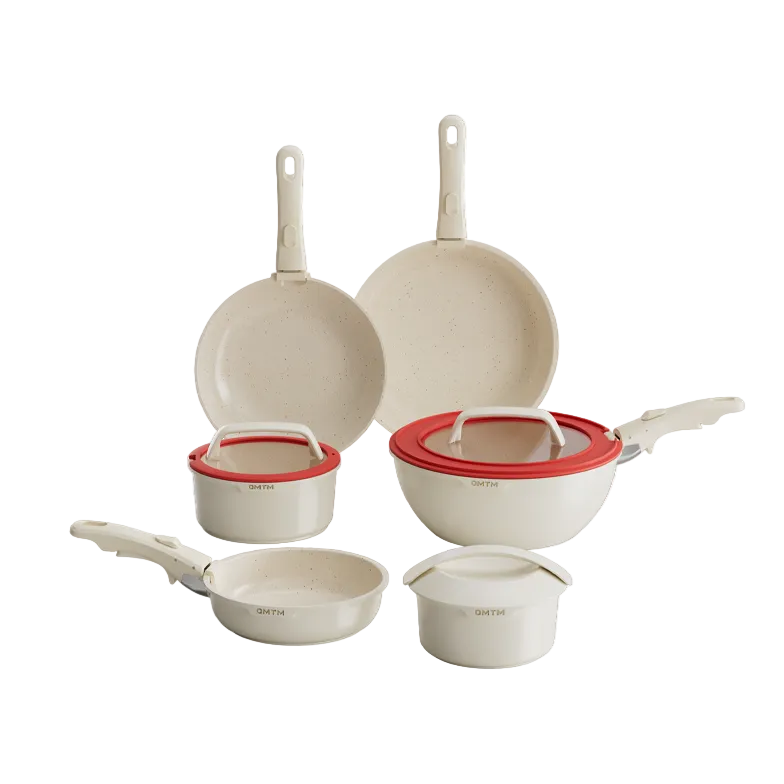
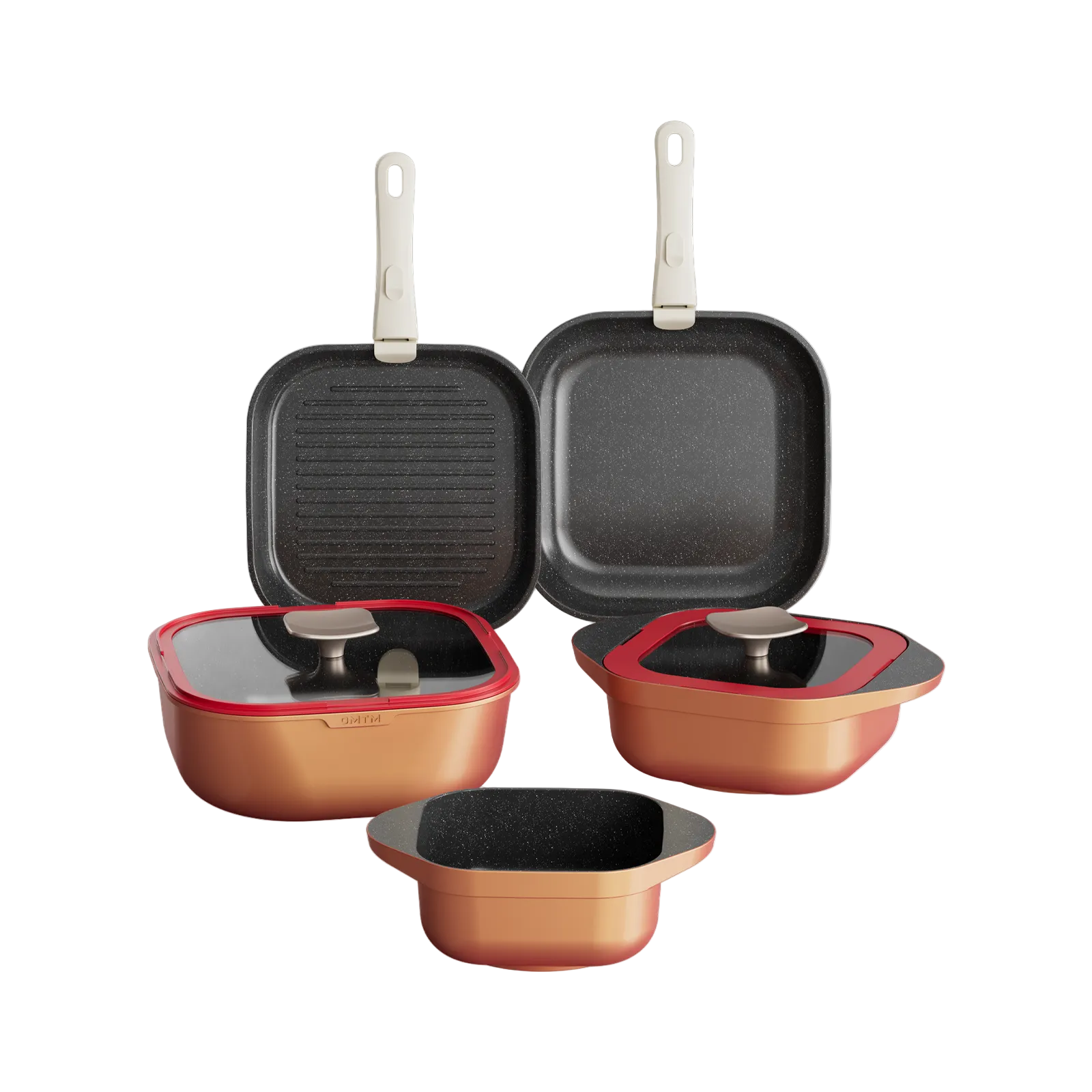
Modern stackable cookware systems make organization easier by nesting securely while protecting cooking surfaces.
7. Follow Dishwasher Guidelines
Not all cookware is created equal when it comes to dishwasher use.
Even if cookware is labeled dishwasher-safe, frequent dishwasher cycles may accelerate wear over time.
For Maximum Longevity
Hand washing is often the gentlest cleaning option for:
-
Nonstick cookware
-
Ceramic cookware
-
Specialty finishes
Dishwasher-safe cookware can still benefit from occasional hand washing to preserve its appearance.
8. Match the Pan to the Task
Using the right cookware for the right job improves both cooking results and durability.
Nonstick Cookware
Best for:
-
Eggs
-
Pancakes
-
Fish
-
Delicate foods
Stainless Steel Cookware
Best for:
-
Searing meat
-
Browning
-
High-heat cooking
Using cookware within its intended range helps prevent unnecessary wear.
9. Keep Handles and Lids Clean
Food particles and grease often accumulate around handles, rivets, and lid edges.
Over time, buildup can become difficult to remove and may affect appearance.
Quick Maintenance Routine
After washing:
-
Wipe handle joints thoroughly
-
Dry lid rims completely
-
Check detachable handle mechanisms regularly
A few seconds of extra attention can keep cookware functioning smoothly.
10. Invest in Quality Cookware From the Start
Proper care can extend the life of any cookware, but quality construction matters too.
Features worth looking for include:
-
Durable ceramic nonstick coatings
-
Thick aluminum or stainless steel bodies
-
Reinforced bases
-
Ergonomic handles
-
Space-saving stackable designs
Well-designed cookware not only performs better but also withstands years of daily use.
Common Cookware Care Mistakes to Avoid
Before you head back to the kitchen, make sure you're not making these common mistakes:
❌ Overheating empty pans
❌ Using metal utensils on nonstick surfaces
❌ Washing hot cookware immediately
❌ Stacking cookware without protection
❌ Using abrasive scrubbers
❌ Ignoring manufacturer care instructions
Avoiding these habits can dramatically increase the lifespan of your pots and pans.
Final Thoughts
Your cookware works hard every day, and a little maintenance goes a long way. By following these simple cookware care tips, you can protect your investment, improve cooking performance, and keep your pots and pans looking great for years.
Remember the essentials:
✓ Use moderate heat
✓ Choose the right utensils
✓ Clean gently
✓ Store carefully
✓ Avoid thermal shock
✓ Match cookware to the cooking task
With proper care, quality cookware can become a reliable kitchen companion for countless meals to come.
At OMTM, we design cookware for modern living. From healthy ceramic nonstick coatings to detachable handles and innovative stackable storage, our cookware collections are built to simplify cooking while standing up to everyday use. Because great cookware should work beautifully—not just today, but for years ahead.